New Braunfels Quality Pool Resurfacing: Pebble & Quartz Finishes, Replastering and Pool Remodeling
Serving New Braunfels, Texas
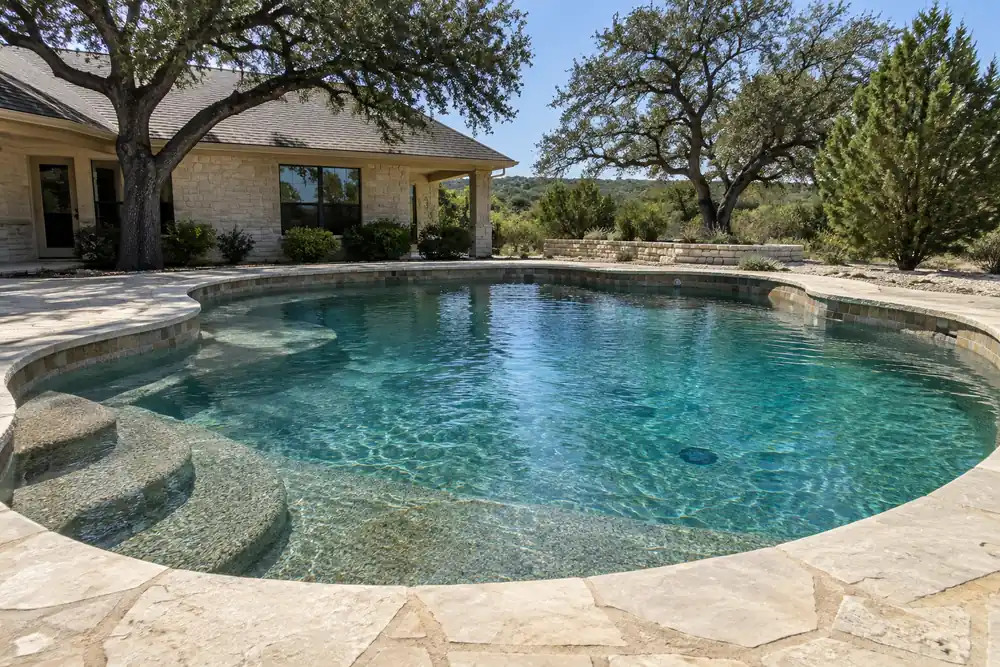
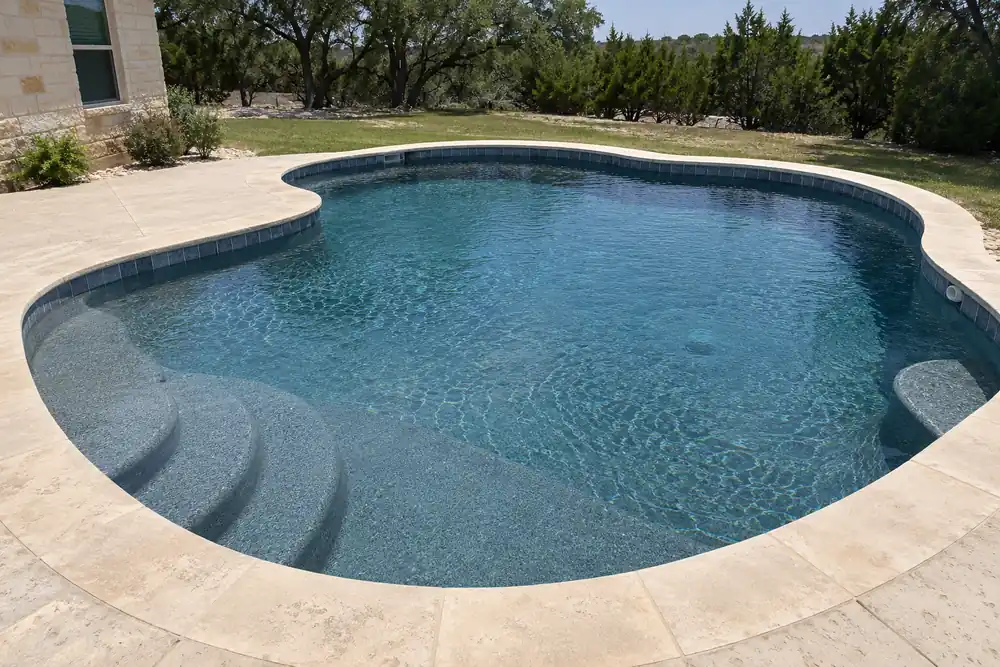
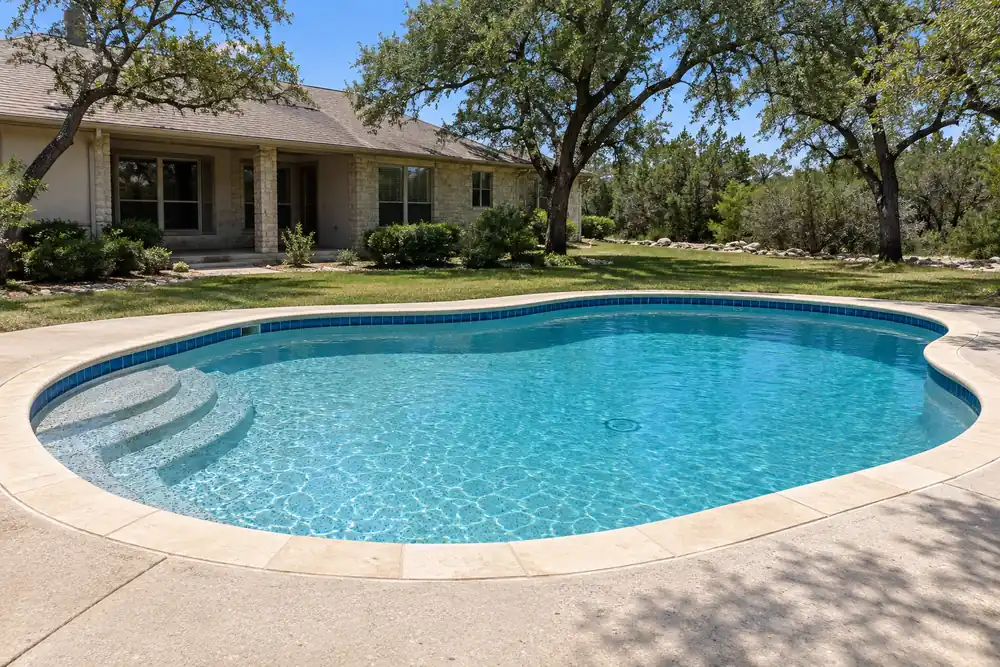
New Braunfels Quality Pool Resurfacing resurfaces and remodels swimming pools in New Braunfels, Texas. Our main services are pebble and quartz finishes, pool replastering and full pool remodels. We work on backyard pools and spas, and on pools at homeowners associations (HOAs), apartments and hotels.
Estimates cost nothing, and calls and estimate requests are answered 24/7. Before anything is booked, we'll talk through which finish suits your pool, when to schedule the work and the city's rules on draining a pool. Local water is hard and summers are long and hot. Both bear on the finish you choose and when it goes on.
Call or request a free estimate any time, 24/7
No charge · answered 24/7
Get free estimates
Why call New Braunfels Quality Pool Resurfacing for pebble, quartz and plaster finishes
Free estimates before anything is booked
Tell us the pool's rough size, the surface it has now and what you'd like it to become. The estimate costs nothing, and nothing is booked until you decide.
Calls answered 24/7
Calls and estimate requests are answered around the clock, weekends included.
Home, HOA, apartment and hotel pools
Backyard pools and spas, plus community, apartment and hotel pools, which have their own state and city rules.
Finishes matched to hard water
Hard water can leave scale on the tile and the finish, the National Plasterers Council says. Some finishes show it sooner than others. We'll talk through which finish suits your water and how you use the pool.
The city's water rules, explained up front
New Braunfels limits when a pool may be drained and where the water may go. We'll go through the city's published rules, and who to confirm them with, before a drain date is set.
Real specs and published prices
These pages give real thicknesses, cure times and code rules from their sources. Prices are typical New Braunfels-area or national figures, never a quote.
Call or request a free estimate any time, 24/7.
(830) 302-4112Pool resurfacing finishes and coatings
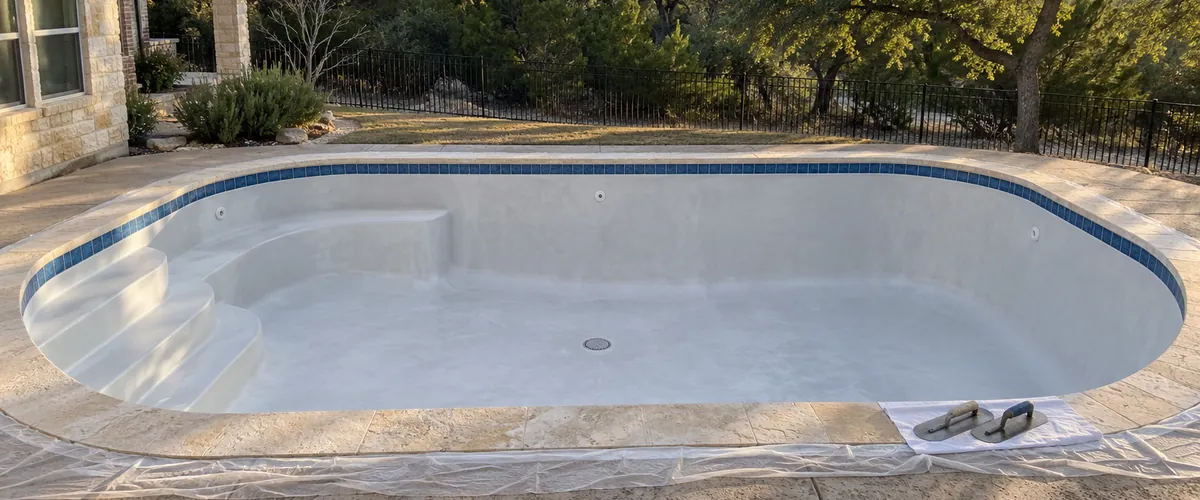
A pool finish is a special cement mix made for pools and put on in one application. Unlike other masonry, it spends its whole life under water while the water chemistry changes. Fiberglass and vinyl pools get their own coatings and liners.
Pebble pool finishes
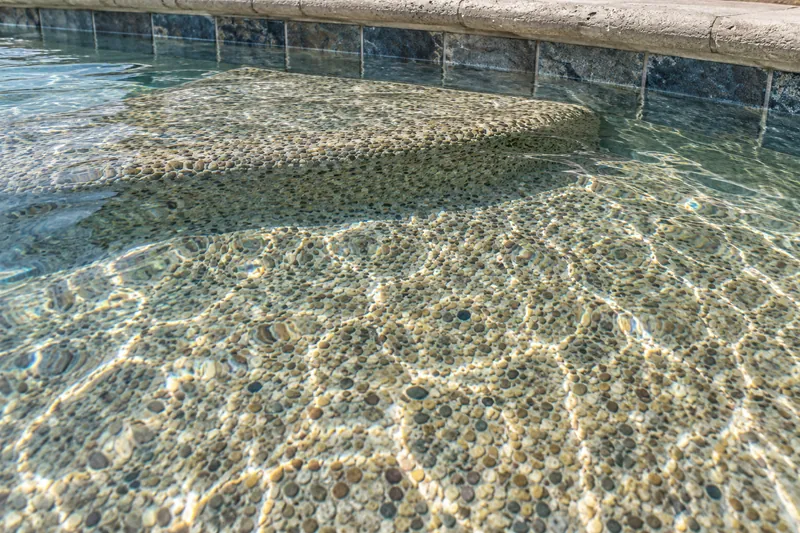
Small pebbles are set in the cement and left exposed at the surface. The National Plasterers Council calls pebble the most durable surface available, though it's a little more textured and costs more. In the PebbleTec range, the original PebbleTec uses the largest stones, and lines with smaller stones feel smoother. Our page on pebble pool finishes covers textures, colors and care.
Glass bead finishes
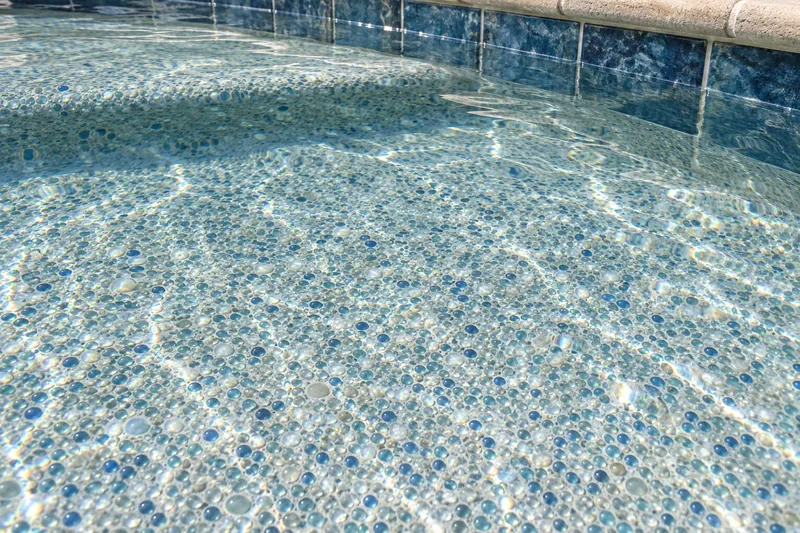
Some pebble finishes blend in glass beads for a smoother feel and extra sparkle. Beadcrete, a glass bead finish from an Australian company, goes on 8 mm to 10 mm thick, and its Australian specification sheet says anything thinner voids the warranty. Glass bead can't safely be heat-treated to lift stains, because heated beads can loosen or shatter.
Quartz pool finishes
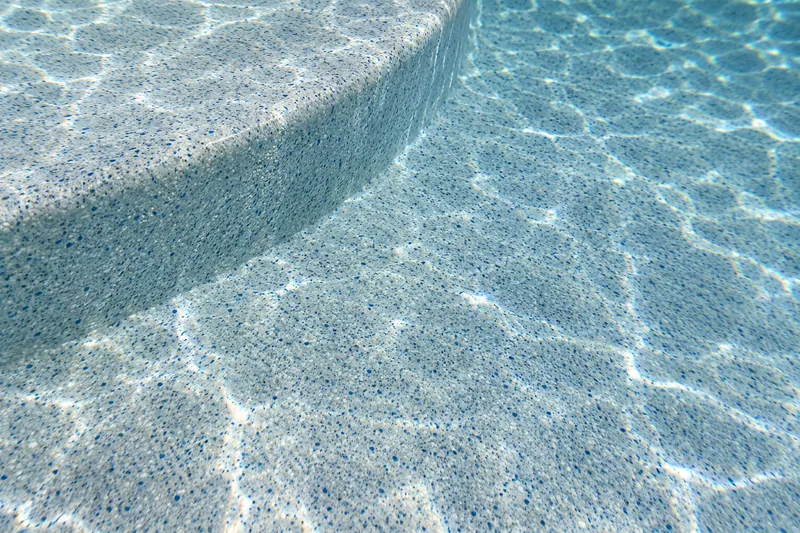
Quartz is one of nature's hardest minerals, and it doesn't react with pool chemicals. Diamond Brite, a quartz finish introduced in the early 1990s, blends quartz with a fortified white cement. It goes on 3/8 to 1/2 inch thick, in colors such as Tahoe Blue and French Gray.
Fiberglass pool resurfacing
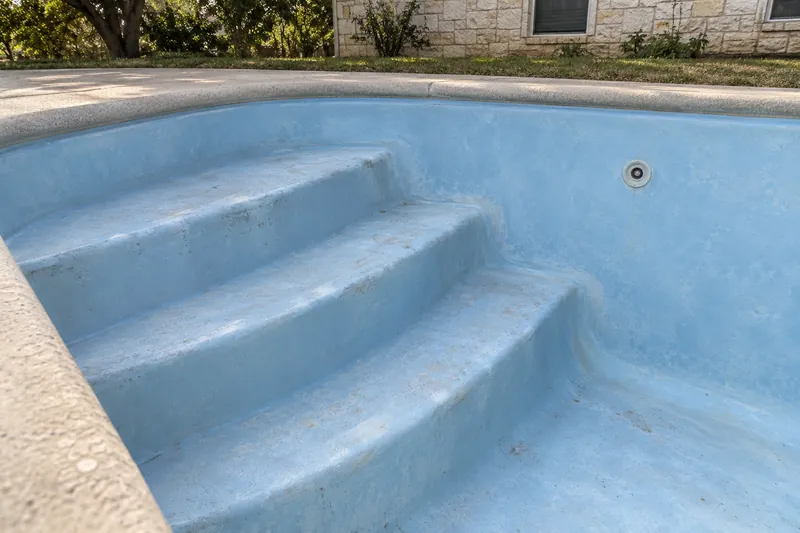
A fiberglass pool's inside surface, the gelcoat, is a colored resin sprayed on at the factory. So a pool already in the ground isn't re-gelcoated in the backyard. It gets a coating made for in-ground pools instead, River Pools, a fiberglass pool maker, explains. One problem it describes is blistering: water works through the gelcoat and pushes it away from the layer behind.
Pool replastering
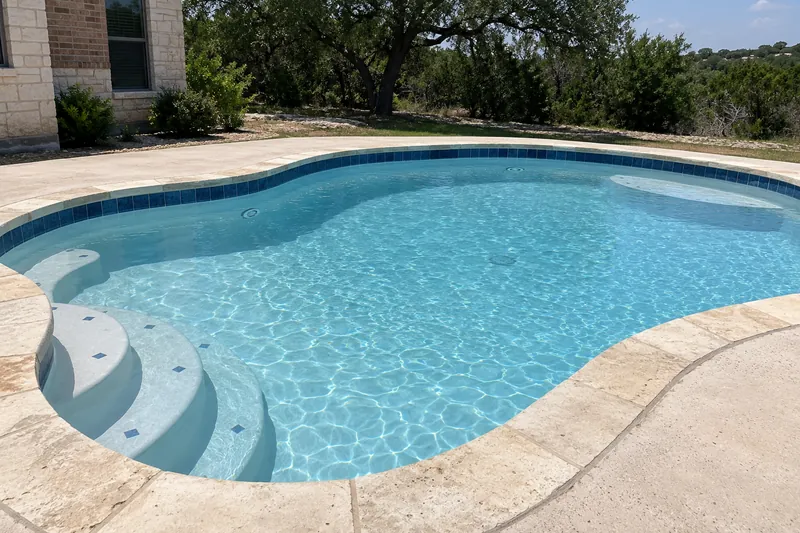
White plaster is a simple mix of white cement, crushed white marble and water. The National Plasterers Council calls it the most affordable pool finish on the market. Our pool replastering page covers plaster repair, colored plaster and the prep a replaster needs.
Vinyl liner replacement
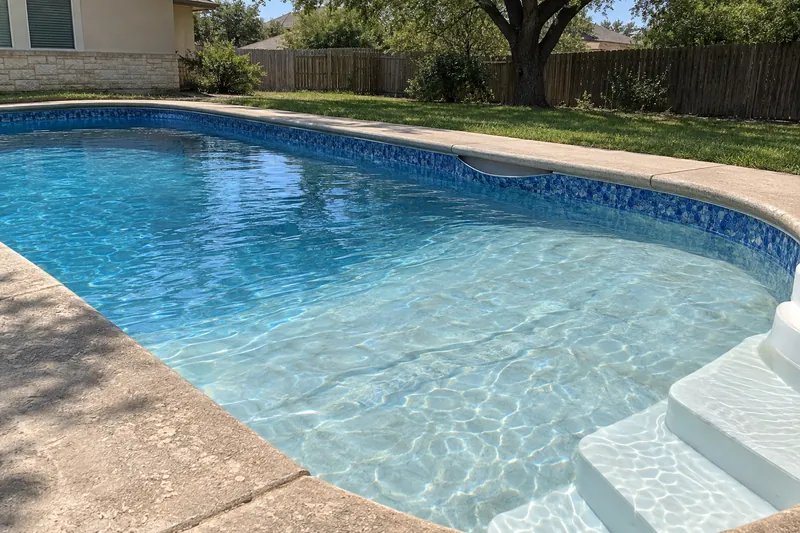
Vinyl liners typically last 10 to 15 years, says Latham, a pool maker. Common replacement liners are 20 or 27 mil thick (a mil is a thousandth of an inch). Signs a liner is due: cracks, tears or wrinkles, a pattern too faded to make out, or a liner slipping out of its track.
Pool painting
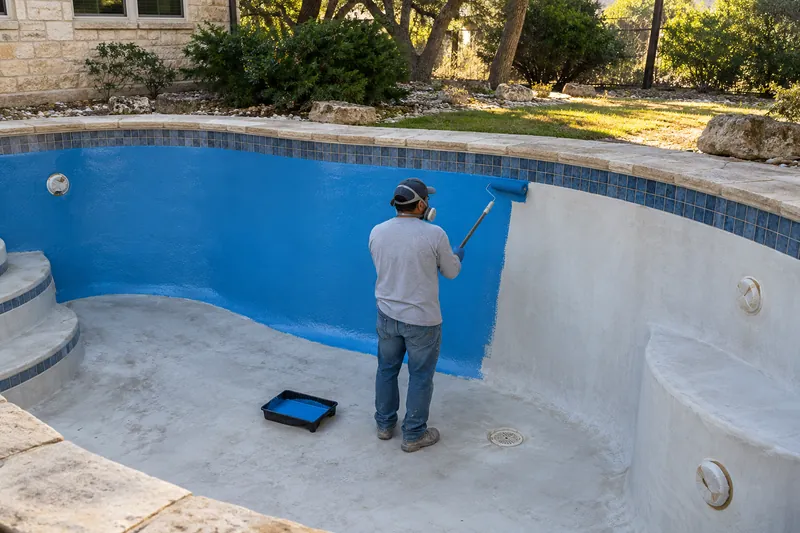
Once plaster has aged, roughened and stained, painting is a cheaper option than replastering, says Ramuc, a pool paint maker. Its high-build epoxy lasts up to 8 years and its acrylic up to 2, depending on the prep and the application.
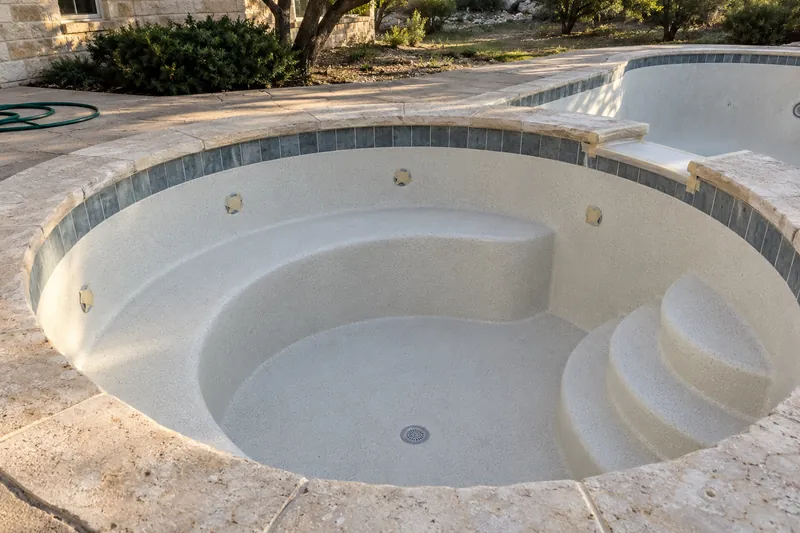
Spa resurfacing
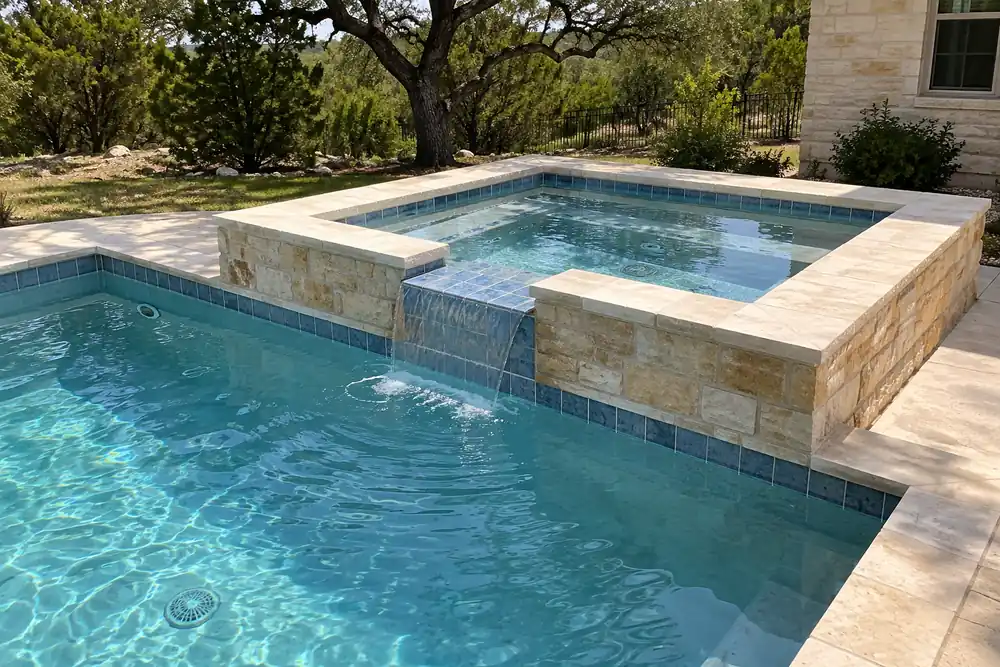
Built-in concrete spas follow the same plastering standard as pools. After a new cement finish, the heater should stay off for 28 days, according to the plastering industry's filling tips. One paint maker advises against painting spas or hot tubs at all.
Call or request a free estimate any time, 24/7.
(830) 302-4112Pool remodeling, tile, coping and decks
The International Swimming Pool and Spa Code, the model code for pools, covers changes to existing pools, not only new ones. A changed part must meet the rules for new work, but the rest of the pool doesn't have to be brought up to the current code.
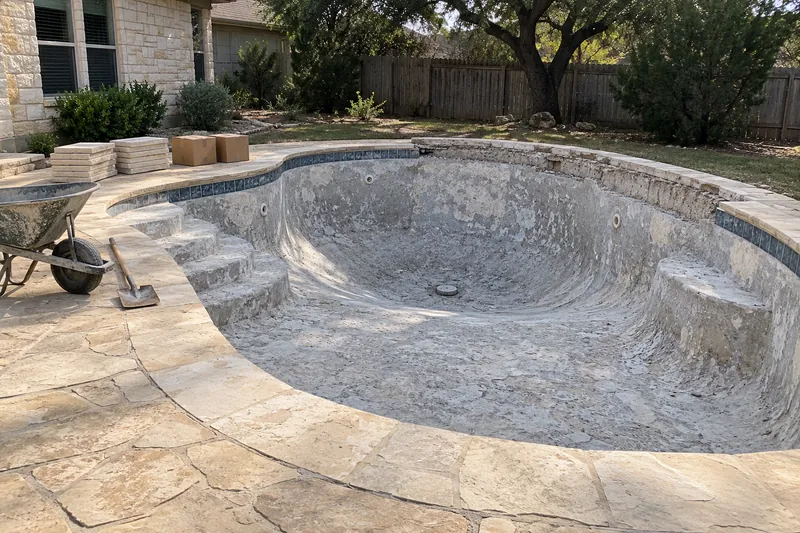
Full pool remodels
A remodel can go beyond the finish, to a new pump, an energy-efficient heater, new sanitation equipment and LED lights. Under a 2023 U.S. Department of Energy rule, new standards for pool pump motors of 1.15 to 5 total horsepower apply from September 29, 2025. Our pool remodeling page covers the whole scope.
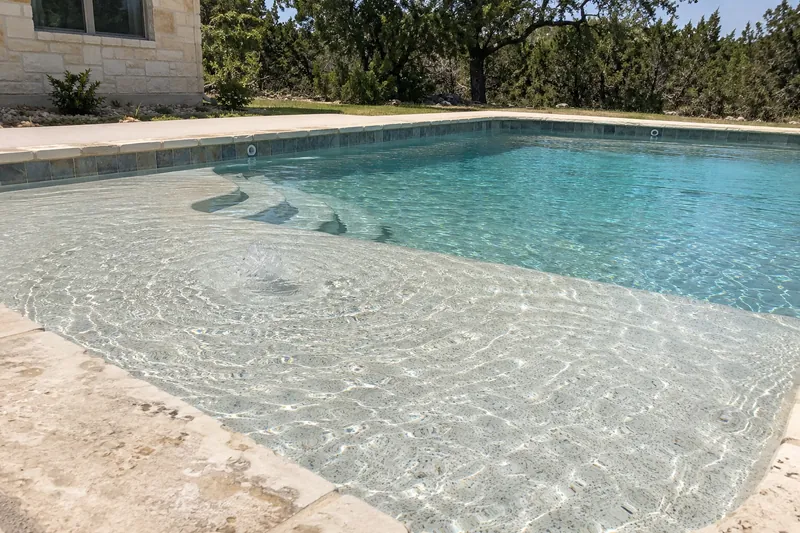
Tanning ledge additions
A tanning ledge, also called a baja shelf or sun shelf, is a shallow shelf inside the pool. Most are 9 to 18 inches deep, says River Pools, and a 9-inch ledge holds about 6 inches of water. In a remodel, a ledge can be built onto the existing shell. After the old plaster is chipped out, a steel rebar frame is set, sprayed concrete goes on, and the ledge is finished with the rest of the pool.
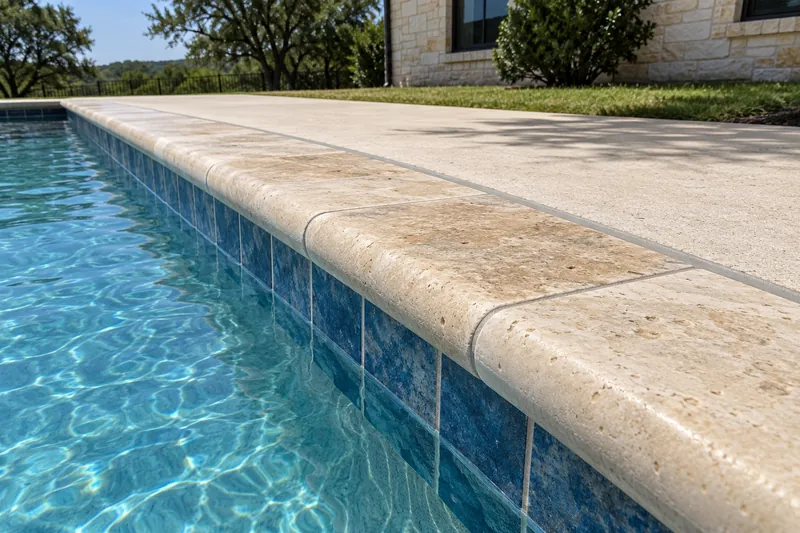
Pool coping replacement
Coping is the cap on top of the pool wall that gives it a finished edge. It can be tile, stone, brick or concrete. It sits on the bond beam, the top edge of the shell, which also holds the waterline tile. A broken bond beam is rebuilt down to the solid shell before the coping and tile go back on, one crack-repair maker explains.
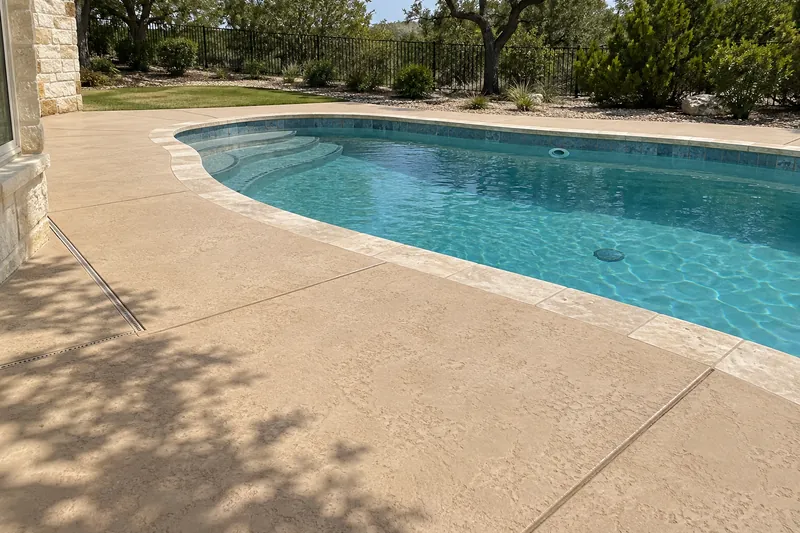
Pool deck resurfacing
One acrylic deck coating goes on in 4 to 8 layers, just under a quarter inch thick in all, over about 2 to 8 clear, dry days, its maker says. During a declared drought stage, New Braunfels Utilities, the city's water utility, requires a Pressure Washing Variance before the washing starts.
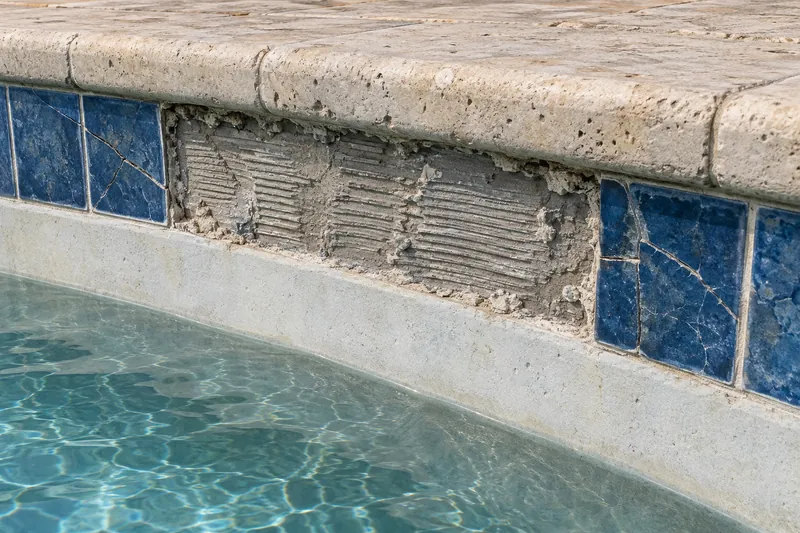
Pool tile replacement
Pool tile must soak up very little water: no more than 3 percent, says Laticrete, a maker of tile-setting materials. Tiled pools also need time before filling. One tile-setting maker's spec calls for 21 days of curing, then filling at 1 inch per hour.
Call or request a free estimate any time, 24/7.
(830) 302-4112Commercial pool resurfacing for HOAs, apartments and hotels
Texas applies the 2021 International Swimming Pool and Spa Code to building, renovating and repairing commercial pools, and the city has adopted the state's public pool rules.
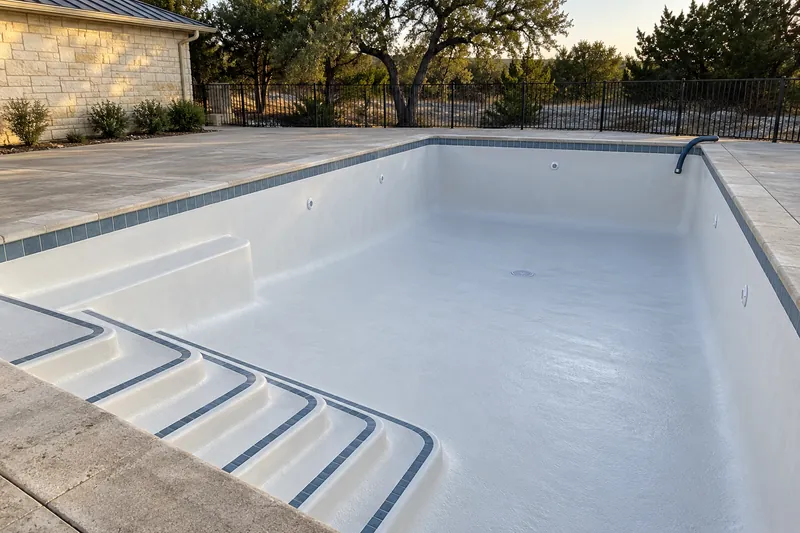
Commercial pool resurfacing
For any pool that isn't a home pool, the 2021 code says the finish must not hide objects in the water. It must also be light: at least 6.5 on the Munsell scale, which rates colors from dark to light. The city's inspection form checks the stripes on step and bench edges, the line where the shallow end meets the deep end, and depth markers with 4-inch numbers.
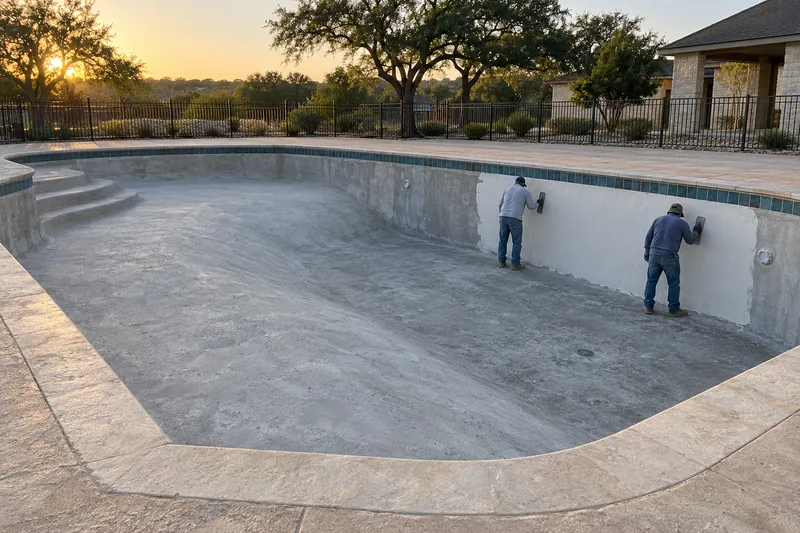
HOA and apartment pool resurfacing
The city treats pools at HOAs, apartment buildings and clubs as semipublic pools, which need a city license. It costs $200.00 for up to two pools at one location, plus $50.00 for each extra pool. The drought plan counts apartment, condominium and community association pools as public pools. Those may be refilled only if they were drained to fix a part that had become hazardous, or a leak.
Hotel and resort pool resurfacing
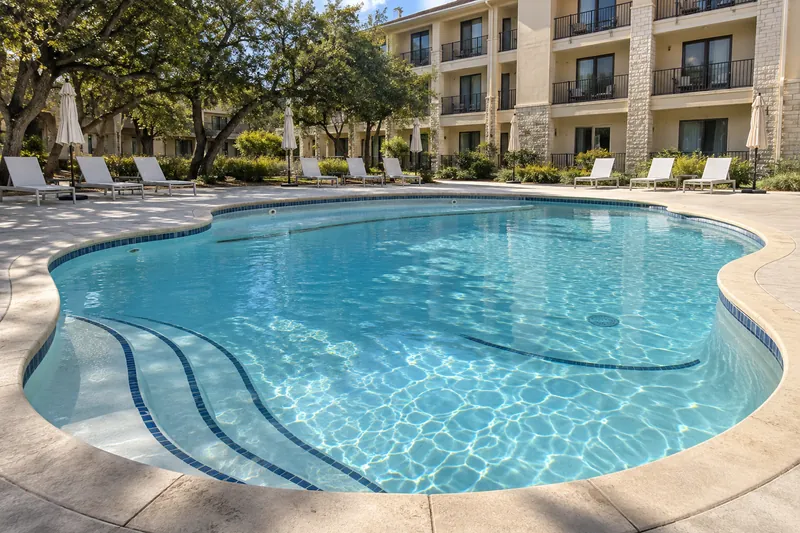
Texas classes hotel, motel and condominium pools as Class C pools, limited to occupants and their guests rather than the public. While one is closed for renovation, the state rules say to keep swimmers out of the pool yard and to post a closed sign on the entry gates.
Call or request a free estimate any time, 24/7.
(830) 302-4112The resurfacing process, from drain to start-up
Every pool is different, but a new cement finish goes through the same six stages. The estimate comes first, and it's free.
Draining, within the city's rules
The city's drought plan allows draining for only three reasons, and it doesn't say whether resurfacing counts. Confirm with New Braunfels Utilities before a drain date is set; the full rule is in the local section below. Draining is risky for any pool: with too little water inside, groundwater pressure can make the shell bulge, crack or even float, a pool maker warns.
Prep: chip-out or bond coat
Hollow, loose plaster is found by tapping and cut out, and one finish maker cuts the old plaster back 2 inches below the tile line. Plaster that stays gets a bond coat, a layer that helps the new finish grip the old. That maker's bond coat cures for at least 6 hours, and the plaster goes on within 3 to 5 days. A pool with several old layers, or a lot of loose finish, is a case for chipping it all out.
Tile, coping and repairs
New waterline tile and coping go in before the finish. One pebble maker's spec leaves a cut-back of at least 1/2 inch where the finish meets the tile. Leaks, including water seeping in through the shell, are fixed at least 24 hours before plastering, a plaster maker says.
Applying the finish
The finish goes on as one mix, in a single application. The National Plasterers Council calls for an average of at least 3/8 inch and no more than 3/4 inch. Its advice for hot or windy days includes wetting the shell first, starting earlier in the morning and shading the hoses and materials.
Filling, without stopping
The fill runs nonstop, as fast as possible, to the middle of the skimmer. A stop can leave a discolored ring at that level. Softened water and reverse-osmosis water (water with its minerals filtered out) shouldn't be used.
Start-up: the first 28 days
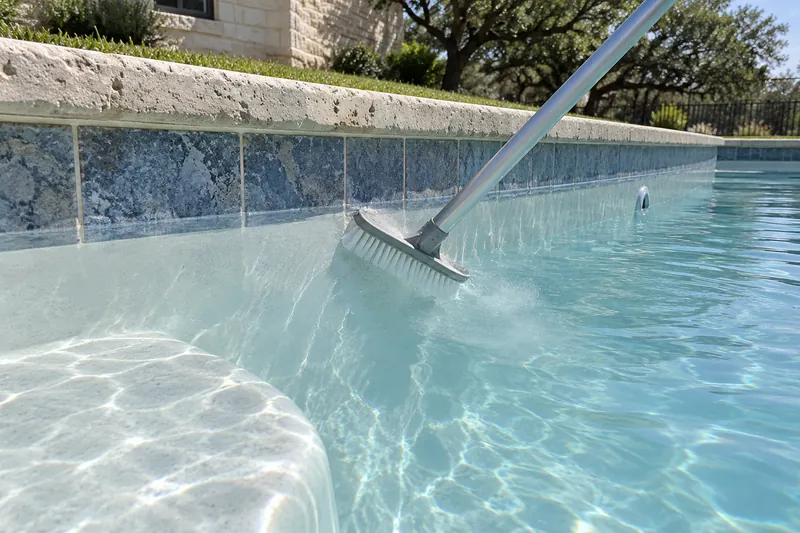
A new finish stains, scales and discolors most easily in its first 28 days. The industry's start-up routine calls for brushing at least twice a day, running the pump nonstop for seven days, no chlorine for 48 hours and no salt for 30 days.
Call or request a free estimate any time, 24/7.
(830) 302-4112Plaster, quartz, pebble and glass bead finishes compared
How long each finish lasts, how it feels and looks, and how to care for it. Surface-life figures for the cement finishes are the National Plasterers Council's.
White and colored plaster
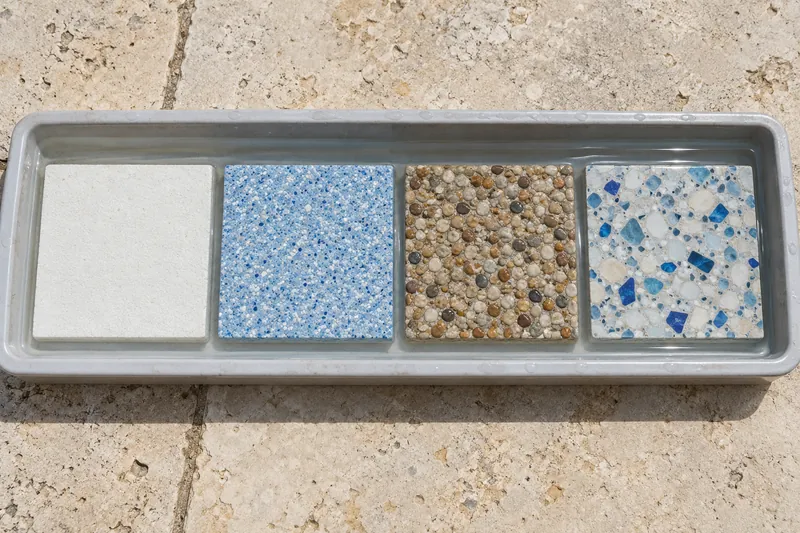
Life: a 5 to 8 year surface. Feel: no rougher than 220-grit sandpaper, like an eggshell. Color: colored plaster mottles more and may fade or lighten. Care: a fairly soft finish, more affected by water chemistry than newer products.
Quartz
Life: a 10 to 15 year surface. Feel: smooth to textured. Color: one quartz maker says its smoother surfaces, especially light colors, show mineral stains and mottling sooner than pebble. Care: a nylon brush, not stainless steel, which marks the finish.
Pebble
Life: a 12 to 18 year surface, the longest of the four. Feel: textured; people with sensitive feet should see samples first, one pebble maker suggests. Color: one maker alone offers over 60 colors in six textures. Care: the texture hides minor staining.
Polished and glass bead
Life: an 8 to 12 year surface for polished finishes. Feel: smooth, with the look of exposed stone; one glass bead maker calls its texture slip resistant but not coarse. Care: nylon brushes only on the smoothest pebble finishes, their maker says.
Fiberglass coatings and paint
Life: a fiberglass pool is typically at least 20 or 30 years old before it needs refinishing, River Pools says. Epoxy pool paint lasts 5 to 8 years, by one paint maker's figures. Color: sun fading on fiberglass is natural, and usually even and gradual.
Color and water color. The finish color sets the water color more than anything else, says CL Industries, a finish maker. White, blue, black and gray finishes give blue water. Green, brown and tan ones give green water. No maker can promise an exact water color.
The makers' warranties. Finish warranties come from the makers, on their terms. PebbleTec's maker covers its pebble, glass bead and pigment for 5 years. That covers materials only, for the first owner, and only when one of its authorized installers put the finish in. Diamond Brite's maker offers up to 10 years on home pools, reduced over time (pro-rated), if the finish is registered within 30 days and monthly water-test reports are kept.
Call or request a free estimate any time, 24/7.
(830) 302-4112How much does pool resurfacing cost in New Braunfels?
The New Braunfels-area prices below are typical starting prices as of October 2026. The same list covers Kyle, Schertz and Seguin, so read them as area prices. None of these are our prices. A real number needs a look at the pool, and the estimate is free.
Plaster, quartz and pebble finishes
- Pebble aggregate
- $7,500–$11,000
- Quartz aggregate
- $6,500–$10,000
- Replastering (white plaster)
- $4,000–$7,000
Typical New Braunfels-area starting prices as of October 2026. Not a quote.
- Average resurfacing project
- $11,000
- Typical range
- $6,000–$15,000
- Pebble
- $7,000–$15,000
- Quartz plaster
- $7,000–$10,000
- Plaster (marcite)
- $6,000–$8,000
- Paint
- $1,000–$2,000
National averages for a 1,000 sq ft pool, 2025. Not a quote.
Fiberglass, vinyl liners and paint
- Fiberglass resurfacing
- $7,000–$15,000
- Inground vinyl liner replacement
- $3,000–$7,500
- Painting a pool
- $1,400–$2,500
National averages: fiberglass 2025, liners 2023, painting 2024. Not a quote.
Remodels, tile and coping
- Mid-range full renovation (quartz, tile, coping, deck)
- $18,000–$35,000
- Waterline tile added to a resurfacing
- $1,500–$4,000
- Full coping added to a resurfacing
- $2,500–$7,000
Typical San Antonio-area prices: renovation as of October 2026; tile and coping, 2025. Not a quote.
What moves the price
Resurfacing is priced by the pool's inside surface area, so the walls, floor, steps, benches and ledges all count. The finish you choose is the biggest single cost. Chipping out failed plaster adds labor, and so can tight backyard access or a long carry from the street. Some contractors include the refill water and others don't, so ask.
Water for the refill
An equipment maker's formula for a rectangular pool's volume: length times width times average depth, in feet, times 7.5 gallons. New Braunfels Utilities bills household water in monthly tiers, and the fill counts with the rest of the home's use that month. Its fiscal year 2027 rates took effect on August 1, 2026. They run from $2.60 per 1,000 gallons in the first tier to $14.80, plus a $2.97 water supply fee, above 12,000 gallons. The utility gives no pool-fill example, so try its Residential Rate Calculator.
Call or request a free estimate any time, 24/7.
(830) 302-4112Pool repairs, leak detection, acid washing and tile cleaning
Not every pool needs a new finish. These jobs often come first, or instead.
Pool crack repair
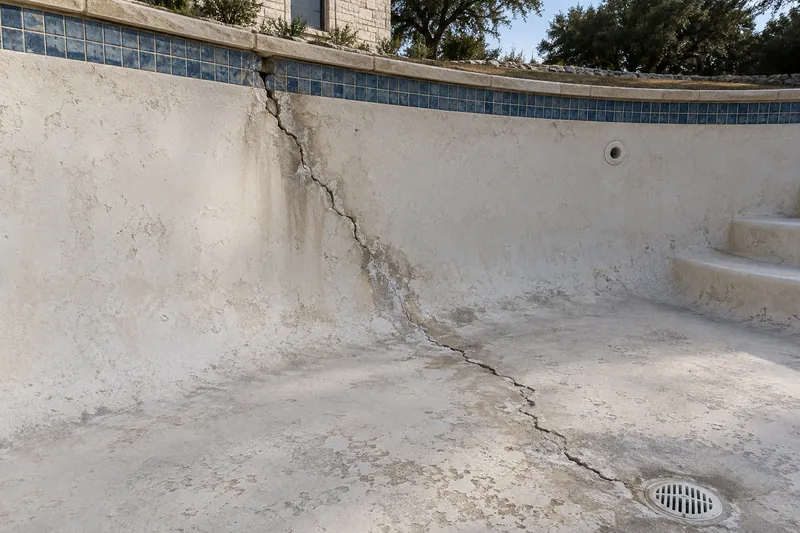
A shrinkage crack in the plaster can look like a structural crack in the shell. Without draining the pool and cutting out a sample, it's virtually impossible to tell them apart, a finish maker says. A crack-repair maker treats a vertical crack wider than 1/8 inch as a red flag, and says to call a structural engineer past 1/4 inch.
Pool leak detection
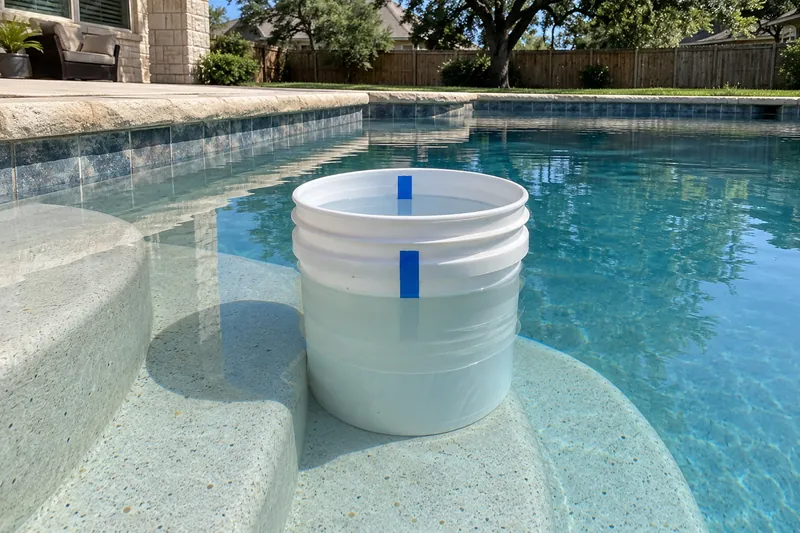
The U.S. Environmental Protection Agency's bucket test compares the pool's water level with a bucket of water set on a step for 24 hours. Its guide says losing more than 2 inches a week, or 3 inches in hot, dry areas, likely means a leak. Fixing a leak is one of the three reasons the city's drought plan allows a drain.
Pool acid wash
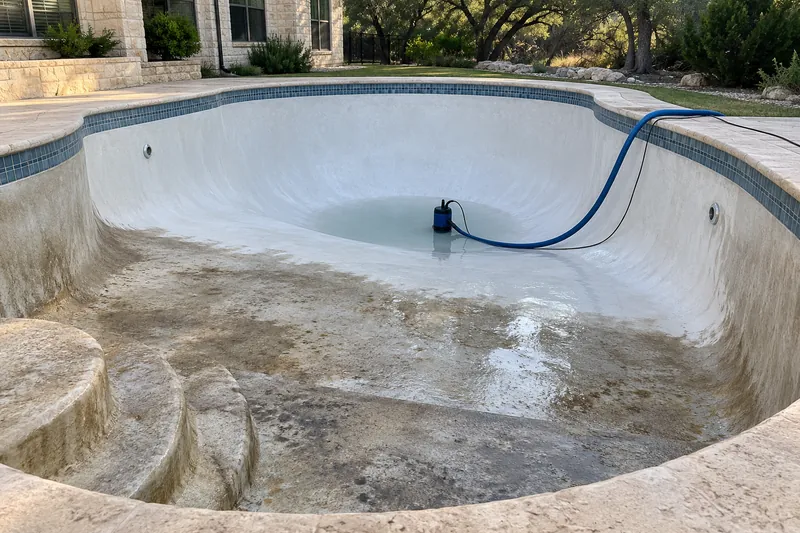
An acid wash cleans a cement finish by dissolving a thin layer of its surface, and the stains, dirt and white mineral bloom (efflorescence) with it. Because each wash takes a layer, a finish can only be washed so many times before it needs resurfacing. Vinyl, fiberglass and painted surfaces aren't suitable.
Tile cleaning and calcium removal
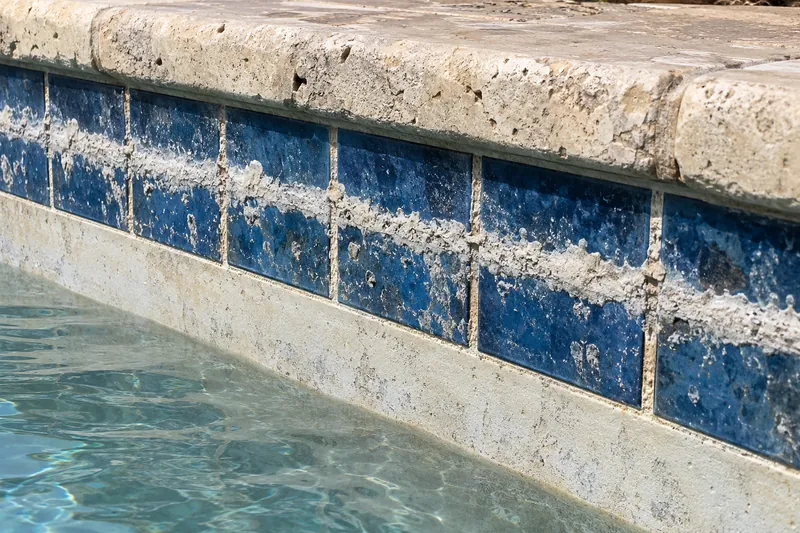
Pools form two kinds of calcium scale, says Latham, a pool maker. Calcium carbonate is white, flaky and fairly easy to remove. Calcium silicate is white-gray and much harder: only a pumice stone and hard work reliably shift it. Evaporating water leaves its calcium behind, which is why a white line forms on the waterline tile.
Pool start-up service
Fresh fill water isn't balanced or clean enough to protect a pool's equipment, tile, coping and plaster, says the Pool & Hot Tub Alliance. Start-up matters for fiberglass and vinyl pools too, and no one-day start-up can safely balance the water.
Call or request a free estimate any time, 24/7.
(830) 302-4112New Braunfels water, weather, ground and pool rules
What shapes a pool surface here: hard water, long hot summers, clay and limestone ground, and drought rules for pools that apply all year.
A growing city of newer homes
New Braunfels sits at the edge of the Texas Hill Country, on I-35 between San Antonio and Austin. Its Comal Springs are one of the two largest springs in the Southwest. The U.S. Census Bureau estimated 122,492 residents on July 1, 2025. In the bureau's 2024 survey, the median home in the city was built in 2007.
Hard water from the Edwards and Trinity aquifers
New Braunfels Utilities, the city's water utility, treats most of its water from the Guadalupe River at its Gruene Road plant. The utility also pumps groundwater from the Edwards and Trinity aquifers. It says that groundwater carries extra calcium and magnesium, which makes the water hard, and that hardness varies by location, water source and season.
State records of the utility's treated-water samples show total hardness from 180 mg/L (January 2025) to 406 mg/L (July 2025). The U.S. Geological Survey calls anything over 180 mg/L very hard. Not every property here is on the utility's water.
Testing the fill water should no longer be optional, the National Plasterers Council says. If the house has a water softener, bypass it for the fill.
Long summers, rare freezes
Federal climate averages for 1991–2020 give New Braunfels 116.8 days a year at 90°F or hotter and 11.0 days at 100°F or hotter. The average August high is 94.6°F. Hot, dry or windy days make fresh plaster set faster, raise the risk of shrinkage cracks and can leave the color uneven between sun and shade.
Freezes are less common, at 32.0 nights a year at or below 32°F. But on February 15, 2021, the high at New Braunfels Municipal Airport was just 15°F. In a freeze, the waterline is a finish's vulnerable spot. The National Plasterers Council advises keeping at least 4 inches of water over steps, benches and sun ledges in freezing weather.
Hill Country limestone and Blackland clay
The Balcones Escarpment runs through eastern Comal County. On the Hill Country side, the soils are mostly shallow, stony clays over limestone. On the Blackland Prairie side, they are mainly deep clays, the federal soil survey says. Clays such as Houston Black swell when wet and shrink and crack as they dry. That movement is one known cause of cracks in pool shells. Clay also holds water around a pool longer than sandy soil does.
The drought plan and draining a pool
The city's updated drought plan took effect on October 1, 2026. Its pool rules now apply all year, not only during declared drought stages. The mayor declared Stage 2 on August 10, 2026, and the utility's stage page still showed it on October 5, 2026.
Under the plan, a pool may be drained only onto ground that soaks up water, or onto a deck that sends the water straight to such ground. And it may be drained for only three reasons:
- to lower rainwater to the normal (maintenance) level;
- to repair, maintain or replace a pool part that has become hazardous;
- to repair a leak.
Draining into a street, gutter, ditch or storm drain is prohibited, and letting the water leave the property counts as water waste. Draining into the sanitary sewer needs New Braunfels Utilities' approval first.
The plan doesn't say whether resurfacing counts. Before you set a drain date, ask the utility's Conservation Coordinator. If a water rule causes real hardship, you can ask for a variance (an exception) in writing, and the utility reviews requests within 30 days.
Pool barriers and the city limits
The city's pool code requires a barrier around every outdoor pool and spa. For permitted pool work, a protective barrier must stay in place from the day construction begins.
A New Braunfels mailing address doesn't always mean the city limits, and the city doesn't enforce its rules outside them. Homes in the extraterritorial jurisdiction (the area just outside the limits) or in unincorporated Comal or Guadalupe County follow county rules, plus any property owners association's own.
Service area. We take pool jobs across this area: New Braunfels, Lake Dunlap, Santa Clara, McQueeney, Marion, Geronimo, Cibolo, Garden Ridge, Seguin, Schertz, Zuehl, Selma, New Berlin, Redwood, Canyon Lake, Universal City, San Marcos, Live Oak, Converse, Wimberley, Bulverde, Spring Branch, Timberwood Park, Kirby, Hollywood Park, La Vernia and Kyle.
Call or request a free estimate any time, 24/7.
(830) 302-4112Pool resurfacing questions from New Braunfels pool owners
What is pool resurfacing?
Resurfacing puts a new inside surface on a pool. In a concrete pool, that's a new cement finish: white plaster, quartz, pebble or polished, the four types the plastering industry lists. The finish isn't part of the pool's structure. Fiberglass pools get a coating made for in-ground pools, and vinyl pools get a new liner.
Is it worth resurfacing a pool?
When the surface is failing, it's the fix. The National Plasterers Council says resurfacing becomes necessary once cracks and wear can no longer be patched or repaired, or the pool no longer looks acceptable. National cost data from 2025 estimates that a resurfaced pool can recoup up to 40% to 80% of its cost in home value. A finish that is only scaled or stained may need an acid wash instead, which can remove the top layer of heavy scale and stains.
What is the average cost to resurface a pool?
National averages for 2025 put a typical job at $11,000. Most run between $6,000 and $15,000 for a 1,000-square-foot pool. Typical New Braunfels-area prices as of October 2026 run from $4,000–$7,000 for replastering to $7,500–$11,000 for pebble. The price depends on the pool's inside surface area, so steps, benches and ledges count along with the walls and floor.
Which months suit pool resurfacing in New Braunfels?
No standard names a best month. Finish makers set temperature limits instead. Diamond Brite's maker wants the finish kept between 50°F and 100°F for 24 hours before and 72 hours after it goes on. New Braunfels averages 116.8 days a year at 90°F or hotter. There are even odds that the last spring freeze has passed by March 8, and that the first fall freeze comes by November 18.
What is the difference between replastering and resurfacing a pool?
Replastering is one kind of resurfacing. White plaster is one of the four cement finish types, alongside quartz, pebble and polished. National 2025 figures show the price gap: replastering at $6,000 to $8,000, against up to $15,000 for pebble.
What is the cheapest way to resurface a pool?
Paint. National 2025 averages put painting at $1 to $2 per square foot, against $6 to $8 for plaster. Paint doesn't last as long: one paint maker gives acrylic and rubber pool paints 2 to 3 years, and epoxy 5 to 8. Among cement finishes, white plaster is the most affordable, the industry's plastering council says.
What is included in pool resurfacing?
Draining, then prep: cutting out loose plaster, cutting back the edge at the tile line, and either a bond coat or a full chip-out. Then the new finish, the fill and the start-up routine. The waterline tile is usually redone at the same time, one finish maker notes. Contractors differ on whether the refill water is included, so ask before you compare estimates.
What is the best material for resurfacing a swimming pool?
It depends on your budget, the feel you want and your water. Any finish can give years of reliable service in a well-built, well-kept pool, the National Plasterers Council says. In its view, pebble is the most durable surface available, though more textured and more costly. Colored ceramic quartz is far more resistant to changing water chemistry than standard plaster. White plaster is the most affordable, but relatively soft.
What is the longest lasting pool resurfacing?
Among cement finishes, pebble. The National Plasterers Council gives it a 12 to 18 year surface, and one finish maker puts well-kept pebble at 15 years or more. Both figures assume balanced water. Any finish can wear out much sooner when the water stays aggressive (low in calcium, pH or alkalinity) for long periods.
How do I know if my pool needs resurfacing?
One finish maker's planning guide lists the signs: leaks, cracks, mottling (blotchy patches), mildew or algae, hollow-sounding walls, and loose pebbles or tiles. Another says to call an installer for widespread etching (rough, eaten-away spots), persistent dark mottling, calcium lumps or any sign of the finish coming loose (delamination).
Can a gunite pool be resurfaced?
Yes. The shell, the concrete structure, is separate from the finish on it. An old finish can be removed or bonded over, and a new one put on. Even a pebble finish can be chipped out and replastered, with more prep, one finish maker says. The pool code requires the plastering to follow the national plastering standard.
Can I resurface my pool myself?
The city lets you work on a home you own as your homestead, if you don't plan to sell it within twelve months. Every permit and fee still applies. Makers set their own limits too. One says exposing its quartz finish properly takes one worker per 300 square feet, within about an hour. PebbleTec is sold only through trained, authorized installers.
How long does pool resurfacing take?
A pool project can take a week or much longer, depending on the work, one finish maker says. The fill alone can take 18 to 36 hours. Then comes the 28-day start-up, with frequent brushing and daily water testing.
When can you swim after a pool is resurfaced?
Once the water is balanced and sanitized, says the Pool & Hot Tub Alliance. Many finish makers add their own start-up rules, and those should be followed for their finishes. Ask which apply to the finish you choose.
Do I need a permit to resurface a pool in New Braunfels?
No city page says either way. The city requires a permit to build, alter or repair a structure, and its list of minor jobs that need no permit doesn't mention pools. Ask the city's Development Services Division before work starts. Outside the city limits, the city's rules don't apply. Comal County's permit list for unincorporated areas names no pool permit, so check with the Comal County Engineer's Office.
Get a free pool resurfacing estimate
Tell us about the pool: its rough size, the surface it has now, the finish you have in mind and when you would like the work done. Calls and estimate requests are answered 24/7.