Pool Painting in New Braunfels, TX
New Braunfels Quality Pool Resurfacing offers pool painting in New Braunfels, Texas. Pool paint is a coating rolled onto plaster, concrete or fiberglass, and it comes in three main types: epoxy, rubber-based and water-based acrylic. One paint maker calls it a more economical alternative to replastering once plaster has aged, roughened and stained.
Painting estimates are free, and the phone is answered 24/7. We'll talk through which paint is on the pool now, whether the surface under it is sound, and the city's drought rules before the pool is emptied.
Call or request a free estimate any time, 24/7
No charge · answered 24/7
Get free estimates
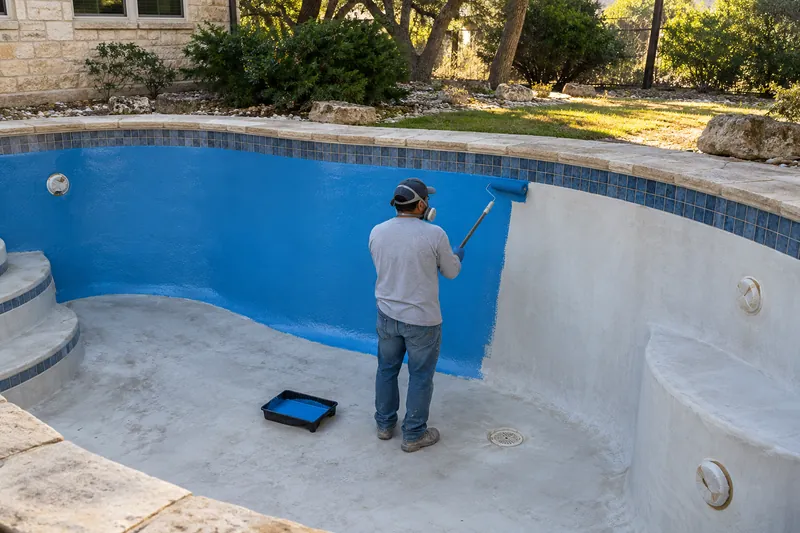
Epoxy, rubber and acrylic pool paint
Epoxy pool paint
Epoxy lasts longest of the three: Kelley Technical Coatings, a pool paint maker, rates it at 5 to 8 years. Some high-build epoxies go on up to 8 mils (thousandths of an inch) thick per coat, which helps smooth a rough surface. Paint makers specify epoxy for fiberglass shells, covered on our fiberglass pool resurfacing page, and one recommends it for saltwater pools. Over time every epoxy film chalks a little, as sun and water chemistry wear down its top surface.
Rubber-based paint
Rubber-based paints come as chlorinated or synthetic rubber. One maker's rubber paints dry to the touch in about 15 minutes and take a second coat after 24 hours. They aren't meant for indoor pools unless the pool already has chlorinated rubber on it. Chlorinated rubber isn't sold in many areas. One version carries 590 grams per liter of volatile organic compounds (solvents that evaporate as it dries), and it may not meet the rules in some areas. Synthetic rubber is the recoat for those places.
Water-based acrylic
Acrylic is the quickest to put on. One maker's acrylic can go on a damp surface, takes a second coat after 4 hours, and lets the pool be filled 3 dry days after the last coat. Acrylics hold their color well in the sun, but they wear faster than solvent paints. Makers differ on bare plaster: one acrylic isn't for bare concrete or plaster at all, while another goes over bare plaster and most sound coatings. Neither is for spas.
Call or request a free estimate any time, 24/7.
(830) 302-4112Matching new pool paint to the old coating
New paint has to suit what's already on the pool, and paint makers say to refinish with the same type. Their rules, side by side:
- epoxy goes over epoxy, and acrylic over acrylic;
- synthetic rubber can go over chlorinated rubber, but not the other way round;
- rubber-based paint must never be recoated with epoxy, unless a conversion coating goes on first;
- one maker's water-based acrylic can go over any earlier pool paint.
Two paint makers describe a simple test for what's on the pool now. A chip of the old paint, about an inch across, goes into denatured alcohol. If it dissolves, it's a water-based acrylic. Stronger solvents then tell the two rubbers apart, and epoxy doesn't dissolve at all.
When the old paint has to come off
Never recoat a pool that's scaling, peeling or blistering, Kelley Technical Coatings says. A few small spots can be sanded and primed first; otherwise the coating comes off completely. Another maker suggests stripping back to the original surface once four or more aged layers have built up. Scraping or sanding old paint can release lead dust, both warn. Kelley also says not to recoat an old epoxy coat too early: it wears a little each year, and it's due once it's thin enough to be almost see-through.
Call or request a free estimate any time, 24/7.
(830) 302-4112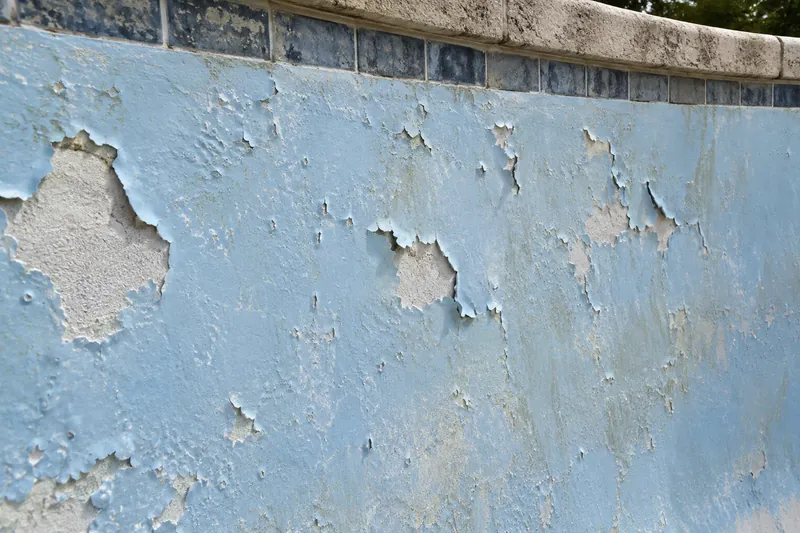
How a pool is painted, from drain to refill
Paint goes onto a drained pool, and the city's drought plan doesn't count repainting among its reasons to drain. Ask New Braunfels Utilities about it before booking a drain date.
Dry the pool shell
Solvent paints need a dry surface. One paint maker waits about 5 dry, sunny days, then tapes 2-foot squares of clear plastic to the walls and floor for about 4 hours. Any condensation underneath means the surface isn't dry enough to paint.
Check and repair the surface before painting
Paint won't fix a weak surface. That maker taps aged plaster with a ball-peen hammer to find hollow or crumbling spots, and repairs them before painting. Poor surface preparation is the number one cause of blistering and other paint failures, it says.
Etch plaster, sand fiberglass
Bare plaster or concrete is washed with trisodium phosphate, a heavy-duty cleaner, then etched with a 10% muriatic acid solution until it feels like fine sandpaper, and rinsed again. A gallon of that solution etches about 100 square feet. Fiberglass is sanded in straight lines instead. A surface that's already painted shouldn't be acid etched, another maker says.
Let new plaster cure first
Fresh plaster or concrete must cure before it's painted. One maker's epoxy waits at least 28 days. Another's acrylic waits until the surface pH is 9 or lower, or 30 to 60 days.
Two thin coats, in the right weather
Makers call for two coats, and two thin coats beat one heavy one. One maker paints only when the air and surface are between 50°F and 90°F, with nights at 50°F or warmer, and not when rain is near. Direct sun can raise heat blisters, that maker warns; another suggests painting the east wall in the morning and the west wall late in the day.
Cure before the refill
One epoxy needs 5 to 7 dry days outdoors before the pool is filled, plus an extra day for each day of rain. Another maker's epoxy schedule runs from 3 days at 75–85°F to 6 days at 60–65°F. Don't cover a curing pool with a tarp or solar blanket, and pump out any rain that gets in.
That weather window is tight here. Federal climate averages for 1991–2020 put the city's summer average high at 92.8°F, above the top of that range. May, June and September are its wettest months. Etching for paint isn't the same job as a cleaning acid wash, which our pool acid wash page covers.
Marion's own drought plan bans filling any pool during its Stages 2 and 3, which matters when a freshly painted pool is ready for water. New Braunfels Quality Pool Resurfacing also offers pool painting in Marion.
Call or request a free estimate any time, 24/7.
(830) 302-4112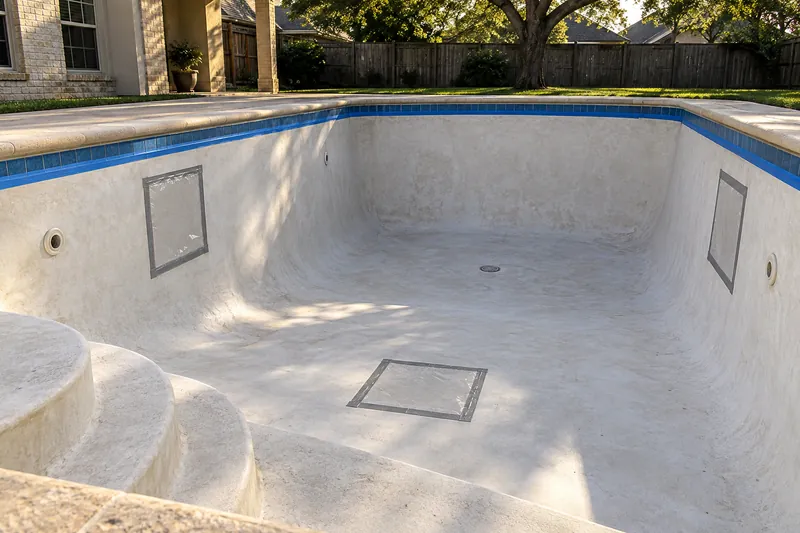
How long pool paint lasts, and how to keep it
Life figures vary by product and by maker. Ramuc, a pool paint maker, rates its acrylic at up to 2 years and two of its rubber paints at up to 5. Its standard epoxy lasts up to 4 years and its high-build epoxy up to 8, all depending on prep and application. Another maker expects 3 to 5 years and says no one can predict a pool paint's life precisely.
Water chemistry and color
Water chemistry drives coating life more than anything, one maker says, and poor control can cut it by 50% or more. Its targets are pH 7.2 to 7.6 and alkalinity of 80 to 120 parts per million (ppm). Calcium hardness should sit at 200 to 400 ppm, and chlorine at 1 to 3 ppm. Never dump chemicals straight onto a painted surface. Shock belongs in a chlorinator or the skimmer, since all pool paints fade under chlorine. Dark blues and black can fade or blister early, so one maker keeps them for accents.
Slippery steps and early fills
Glossy painted steps and shallow areas get slippery. Makers sift silica sand onto the wet coat or mix in a non-skid additive. Filling the pool before the paint has fully cured leaves a blush over the surface that looks like fading or chalking.
Call or request a free estimate any time, 24/7.
(830) 302-4112Pool painting cost
No New Braunfels price list covers pool painting, so national averages are the best guide. Paint runs $1 to $2 per square foot of pool surface on 2025 national averages, well under the $6 to $8 the same figures give plaster. A 2024 national figure puts painting a pool at $1,400 to $2,500 with up to 10 gallons of paint, not counting draining or repairs.
They're published averages; New Braunfels Quality Pool Resurfacing prices each pool at a free estimate. When the plaster underneath is too far gone for paint, our pool replastering page covers the alternative.
- Painting, per sq ft of surface (2025)
- $1–$2
- Painting a pool, up to 10 gallons (2024)
- $1,400–$2,500
- Epoxy pool paint, per gallon (2026)
- $100–$200
National averages for the years shown. Not a quote.
Call or request a free estimate any time, 24/7.
(830) 302-4112Pool paint questions owners ask
How much does it cost to paint a pool?
National averages from 2025 put pool painting, labor included, at $1,500 per 1,000 square feet of surface. How much paint you need depends on the surface. One maker's epoxy covers 175 to 200 square feet per gallon kit on a bare or rough surface, and 400 to 450 on a recoat. The cost section above has more.
Is painting your pool a good idea?
It can be, for sound plaster that has aged, roughened and stained. At the point where an owner is weighing a replaster, one paint maker calls paint a viable and more economical option. It isn't a cure for weak plaster, though: hollow or crumbling areas need repair first. On life, epoxy, the longest-lasting paint, gets 5 to 8 years on one maker's figures.
Can I paint my pool myself?
Paint makers publish their own application guides, and those show the size of the job. It means draining, days of drying, a moisture test, repairs, acid etching or sanding, and two coats inside a narrow temperature window. Then come several dry days of curing before the refill. Scraping or sanding old paint can release lead dust. The city's residential code exempts painting and similar finish work from permits, but neither it nor the city's list of cosmetic jobs mentions pools. Whether a repaint needs one is a question for the city's Development Services office.
What kind of paint do you use on a pool?
A paint made for pools, in one of three families: epoxy, synthetic or chlorinated rubber, or water-based acrylic. The right one depends on the surface and on what's on it now. Epoxy goes on fiberglass and suits saltwater pools, rubber goes over rubber, and one maker's acrylic goes over any earlier pool paint. Spas are different: one maker allows only its high-build epoxy in spas and hot tubs, and another doesn't recommend painting them at all.
Can I paint my pool without draining it?
Not with the paints these makers describe. Each one's directions have the coating dry and cure in an empty pool before it's filled, and filling too soon spoils the finish. In New Braunfels that brings in the drought plan, so ask New Braunfels Utilities before the pool is drained.
Get a free pool painting estimate
Questions about painting a pool reach New Braunfels Quality Pool Resurfacing 24/7, from New Braunfels and nearby towns. Tell us what the pool is made of and what's on it now.