Plaster vs Quartz vs Pebble: Choosing a Pool Finish in New Braunfels
New Braunfels Quality Pool Resurfacing compares the three main pool finish choices for New Braunfels, Texas: white plaster, quartz and pebble. The National Plasterers Council rates plaster a 5 to 8 year surface, quartz 10 to 15 years and pebble 12 to 18, and the price rises in the same order.
Below: what each finish is made of, how it feels and wears, what its warranty asks of you, and what it costs here. Our pages on quartz pool finishes and pebble pool finishes go deeper on each. Estimates are free, and we'll help you weigh the three against how you use your pool.
Call or request a free estimate any time, 24/7
What plaster, quartz and pebble pool finishes are made of
All three are cement-based coats, put on over the pool's concrete shell. What changes is the aggregate mixed into the cement, and whether that aggregate is left exposed at the surface.
White plaster
Traditional plaster mixes white cement and water with a white sand, typically limestone, quartz or dolomite in the council's technical description. It's troweled smooth, so cement forms the surface you touch. The council calls it a relatively soft finish, more open to swings in water chemistry than some newer products.
Quartz
Quartz finishes replace some or all of the marble sand with quartz, a very hard mineral that pool chemicals don't attack. One maker's quartz line uses quartz for all of its aggregate, while its enhanced plaster swaps out 35% of the marble sand. Colored quartz is a ceramic-coated sand, and the council says it makes a much harder surface than standard plaster. Like plaster, quartz leaves cement at the surface, one maker notes, so colored quartz can show blotches, swirls and trowel marks.
Pebble
Pebble finishes set small stones, and sometimes glass, through the mix. After troweling, the surface cement is rinsed away, so the stones themselves take the wear. One maker says that leaves pebble more resistant to staining, etching and wear than plaster or quartz.
Polished finishes
A fourth family grinds an aggregate mix smooth to reveal stones of mixed sizes and colors. The council lists polished finishes as an upgraded-cost option, like pebble, with an 8 to 12 year surface.
Call or request a free estimate any time, 24/7.
(830) 302-4112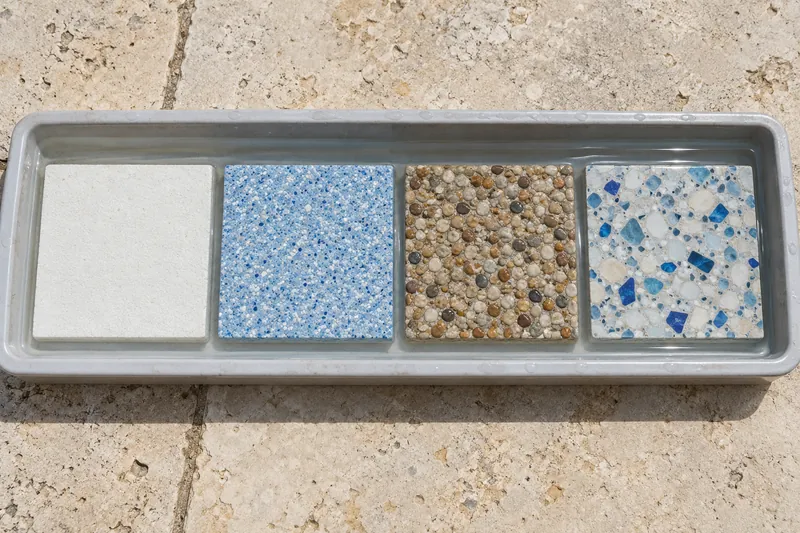
Plaster vs quartz vs pebble: life, feel and stains
How long each finish lasts
Treat the council's ranges as typical, not fixed: it also gives plaster up to 20 years when it gets proper care. Makers quote their own numbers too: one quartz maker gives its finish 10 to 15 years on one page and 8 to 12 on another. One pebble maker won't name a figure at all, and ties life to water chemistry, climate and care.
How each finish feels
Troweled plaster is the smoothest. The council's yardstick is fine sandpaper of 220 grit or finer, and it warns against leaving steps and benches so smooth that people slip. Quartz runs from smooth to lightly textured; owners of one quartz line call it comfortable, with a very slight texture. Pebble is the roughest of the three, and stone size sets the feel. In one maker's range, the original line uses the largest stones for the most natural feel, and smaller stones give a more refined texture.
Stains, scale and mottling
Texture hides wear. The council expects smooth troweled finishes to show more visible cosmetic marks over time than exposed-aggregate ones. In one quartz maker's own comparison, smooth light colors show mineral staining and mottling (blotchy patches) first, while pebble breaks it up.
Colored plaster changes the most. It mottles more, its fine surface cracks show more, and its color may fade or lighten over the years, none of which the council counts as a defect. In a city with hard water, scale adds to the list on any finish.
Call or request a free estimate any time, 24/7.
(830) 302-4112Plaster, quartz and pebble prices in New Braunfels
Typical New Braunfels prices, as of October 2026, put pebble at $7,500 to $11,000, quartz at $6,500 to $10,000 and white plaster at $4,000 to $7,000. Size, prep and access move every one of these, so treat them as averages until New Braunfels Quality Pool Resurfacing has seen the pool.
- Basic white plaster
- $4–$6
- Quartz aggregate
- $6–$9
- Pebble aggregate
- $8–$12
Typical San Antonio-area prices as of October 2026, per square foot of inside surface. Averages, not a quote.
Call or request a free estimate any time, 24/7.
(830) 302-4112Warranties and care for each finish
Finish warranties come from the makers, and their length tends to follow the finish. One maker's own range shows it: 15 years on home pools for its exposed-aggregate finishes, 10 for its quartz finish and 7 for its quartz-enhanced plaster.
Every one of them comes with conditions. Expect to register the finish within 30 or 60 days, depending on the maker. Expect an approved or certified installer, and water-test records kept weekly or monthly. Color is often left out: one finish maker won't warrant the color of any pigmented finish. None of these is a warranty from us; ask what the maker requires before the work starts.
Care differences between finishes
Brushes differ by finish. A quartz maker says stainless-steel bristles are meant for exposed pebble and will mark its quartz, so its owners should use nylon. All three go through a 28-day start-up of brushing and water testing, with details set by each maker. Plain plaster can be covered with water as soon as it sets. Quartz and pebble may first need cleaning or exposing, usually the same day or the next.
Call or request a free estimate any time, 24/7.
(830) 302-4112Choosing the best finish for your pool
No finish wins on every count. Match it to what matters most to you:
- Lowest cost: white plaster, which the council calls the most affordable pool finish on the market.
- Color with a smooth feel: quartz, harder than plaster and far more resistant to changing water chemistry, the council says.
- Longest surface life: pebble, at 12 to 18 years on the council's figures, with a texture that disguises minor stains.
- Smooth with the look of stone: a polished finish.
Whichever you choose, the water decides much of how long it lasts. The council blames unbalanced chemistry first when a finish deteriorates.
Plaster, quartz and pebble finish questions
What is the best material for pool finishes?
It depends on whether price, feel or life matters most. On the council's figures, pebble lasts longest and plaster costs least, with quartz between them on both. Colored quartz is far more resistant to changing chemistry than standard plaster, the council says. One pebble maker credits the exposed stone with holding up to cracking, stains and fading better than plaster.
What is the most expensive type of pool finish?
Among cement finishes, pebble and polished sit in the council's upgraded-cost group, above quartz and plaster. On 2025 national figures, pebble runs $7 to $15 per square foot. A fully tiled interior reaches highest on that list, at $8 to $30 or more per square foot.
Can a quartz or pebble finish go over old plaster?
Yes, with the right prep. Plastering over an existing finish calls for a bond coat, a layer that helps the new finish grip the old, one quartz maker says. It may not be needed if the old finish is chipped or sandblasted off first. A pebble maker's remodel process strips the old surface to a blank base. Going the other way, an old pebble finish can be chipped out and replaced with quartz, with more prep than plaster over plaster.
Choose your pool finish with a free estimate
Calls and estimate requests are answered 24/7. Tell us the finish your pool has now and the one you are weighing, and we'll talk through plaster, quartz and pebble for your water and your budget.