Pool Tile Cleaning and Calcium Removal in New Braunfels, TX
New Braunfels Quality Pool Resurfacing offers pool tile cleaning and calcium removal in New Braunfels, Texas. That means taking the white crust of calcium scale off the waterline tile, so sound tile can stay in place instead of being replaced.
Ask for a free tile cleaning estimate by phone or through the form. We'll talk through the tile itself, how heavy the scale is, which cleaning method the tile's maker allows, and the hard water behind the buildup.
Call or request a free estimate any time, 24/7
No charge · answered 24/7
Get free estimates
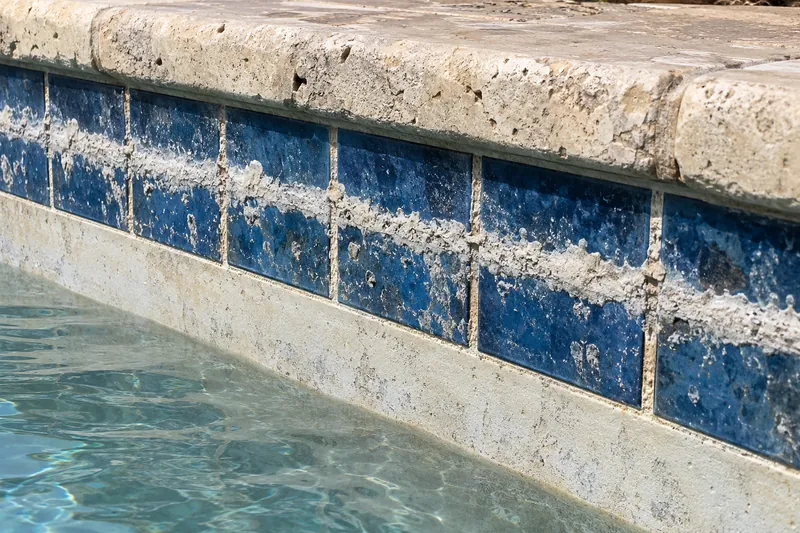
Calcium scale on pool tile: carbonate, silicate and harder deposits
Scale is what settles out of pool water when its calcium hardness, pH or alkalinity runs too high, a tile-setting materials maker explains. Its main ingredient is calcium carbonate. About 99% of the scale found in water is calcium-based, a pool chemical maker adds.
Calcium carbonate or calcium silicate?
Latham, a pool maker, separates two kinds. The carbonate kind is white, flaky and the easier of the two to shift. Silicate is white-gray and harder to move. It also builds up more slowly, so a pool with silicate on its walls often has scale inside its pipes as well.
To tell which is which, the maker puts a few drops of muriatic acid on the crust, wearing safety goggles. Carbonate foams; silicate doesn't react. The kind decides the tool. Carbonate comes off with a pumice stone, a stain eraser or a scale remover. For silicate, the maker says the only reliable way is a pumice stone and a lot of hard work, and scale-dissolving additives can take months.
Harder, rarer scales
The chemical maker describes rarer scales that are harder still. On the 1-to-10 Mohs scale of mineral hardness, calcium phosphate rates 5, against 3 for calcium carbonate. It knows of no chemical that removes silica scale, and says calcium sulfate is most practically sanded or ground off.
Why the waterline turns white first
Evaporation leaves calcium behind on the tile at the water's edge. The chemical maker counts that crust as scale even though it sits above the water. Carbonate scale always forms first where the water's saturation index (a measure of its pull toward scale) is highest, it says. Calcium hardness alone is rarely the driver unless the numbers are extreme, and Latham points to pH as the bigger lever.
New Braunfels water starts out hard: one state sample of the utility's treated water read 406 mg/L of total hardness on July 16, 2025. Every sample, with its date, is listed in the guide to hard water and pool surfaces.
Zuehl draws hard water too, from Green Valley Special Utility District, and pool tile cleaning in Zuehl is one of the services New Braunfels Quality Pool Resurfacing offers there. State samples of that district's treated water read 286 to 294 mg/L on January 15, 2025.
Call or request a free estimate any time, 24/7.
(830) 302-4112Calcium removal methods, and where tile makers disagree
No single method suits every tile. Check the tile maker's care guide first, since some rule out blasting, pumice or acid entirely. Two makers advise trying any method on a hidden spot before the whole tile line.
Bead blasting and softer media
Blasting fires a fine media at the tile at low pressure, with the water dropped about 6 inches below the tile first. Kramer Industries, a maker of blasting media, says glass beads remove calcium and scale without harming the tile or its glaze. The beads sink, and the pool's next cleaning cycle picks them up. It puts a regular-size pool at around two hours.
Tile makers are more cautious. One glass tile maker places glass bead at the aggressive end of the range. Baking soda, or a media of similar hardness, is generally enough to remove scale and safe for its tile, glass included, it says. A maker of glass and ceramic tile advises against blasting or abrading its tile at all.
Pumice and hand scrubbing
Pumice works on calcium on ceramic and porcelain tile, one pool tile maker says, but it isn't recommended for glass or vinyl tiles. The glass tile maker warns that pumice stones and wire brushes can damage its tile. The maker of a pumice scouring stick sets limits of its own: not on glass, fiberglass or plastics. Some decorative tile and colored porcelain may be damaged by abrasives, it adds.
Acid and pressure washing
Makers split on acid too. The pool tile maker calls muriatic acid a strong option for stubborn calcium, with gloves and eye protection. The glass tile maker says hydrochloric (muriatic), hydrofluoric or phosphoric acid must never touch its tile, because certain acids damage glaze and iridescent glass. The pool chemical maker doesn't recommend acid directly on scale either. Washing a whole finish with acid is a separate job, which our pool acid wash page covers.
A pressure washer can help if it stays under 1,500 pounds per square inch and off the grout lines, the pool tile maker says. In New Braunfels, the utility requires a Pressure Washing Variance (written permission to pressure wash during a drought stage) before the work starts. On October 5, 2026, the utility listed Stage 2 as the current stage, in effect since August 10, 2026.
Call or request a free estimate any time, 24/7.
(830) 302-4112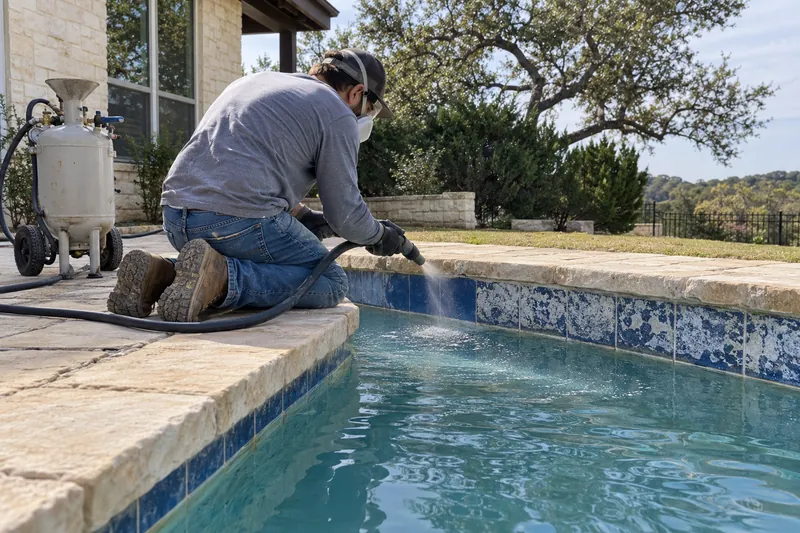
Stopping calcium from coming back to the tile
Cleaning removes the crust, not the cause. Scraping, blasting or acid leaves the water balance as it was, the pool chemical maker warns, so scale usually returns. The glass tile maker measures balance with the Langelier Saturation Index. At zero the water is balanced, and 0.0 to 0.5 is acceptable. Above 0.5, the water can turn cloudy and scale faster. Below zero, it can eat into plaster and grout.
Scale can also form underneath tiles when the pH runs high, a tile-setting maker says, pressing on them until they lose their bond. When tiles are loose or cracked rather than just crusted, our pool tile replacement page covers resetting them.
Call or request a free estimate any time, 24/7.
(830) 302-4112Pool tile cleaning and calcium removal cost
Tile cleaners in New Braunfels and San Antonio don't publish prices, so these figures come from elsewhere in Texas and from national averages. Sound tile that's only stained can get a professional acid wash for $150 to $300 instead of being replaced, on 2024 national figures. For heavy calcium, the Texas figures alongside compare three methods.
Use those ranges as a guide only. New Braunfels Quality Pool Resurfacing sets a firm price after measuring the tile line and checking the scale, and the estimate is free.
- Glass bead blasting, pool not drained
- $900–$2,400
- Pumice stone, by hand
- $150–$400
- Power washing
- $800–$1,200
Typical Texas prices, 2026. Averages, not a quote.
Call or request a free estimate any time, 24/7.
(830) 302-4112Questions about cleaning pool tile
How much does it cost to clean pool tiles?
On national figures for September 2026, cleaning pool tile starts at $1.75 to $2.17 per linear foot. That figure is for routine cleaning. The cost section above has Texas prices for taking off heavy calcium, by method.
How often should pool tiles be cleaned?
Brush the tile every week, especially at the waterline, where evaporation is highest, a glass and ceramic tile maker says. It also suggests running overflow features from sunrise to sunset to limit mineral buildup. For stubborn stains, one pool tile maker suggests a deep clean every 3 to 6 months.
What is the best way to clean pool tile?
It depends on the tile and the scale. Find out what the crust is first: a few drops of muriatic acid separate easy carbonate from stubborn silicate. Then read the tile maker's care guide, because some forbid pumice, acid or blasting outright. Try the chosen method on a hidden spot before doing the whole line.
How to clean pool tile without draining?
Most tile cleaning doesn't need an empty pool. For blasting, a media maker lowers the water about 6 inches below the tile. A pool chemical maker's alternative keeps the pool full. The water is held slightly on the scale-dissolving side while its product works, with brushing at each visit. The maker says this generally takes 2 to 3 weeks. Before lowering the water, check with New Braunfels Utilities. Draining is limited to three reasons under the drought plan, and the water may only go onto ground that soaks it up.
How do I clean the tiles around my pool?
For the deck and paving around a pool, a blasting-media maker prefers walnut shells, a soft, organic media it says won't damage wood, pebble-topped cement or tile. For travertine and limestone, both calcium-carbonate stone, the Natural Stone Institute advises mild cleaners with no acid in them. For algae or moss near a pool, it suggests a rinse of clear water and mild bleach. The drought-stage rule on pressure washing applies to decks too.
Get a free estimate for pool tile cleaning
New Braunfels Quality Pool Resurfacing answers calls and estimate requests 24/7 for tile cleaning and calcium removal in New Braunfels and nearby towns. Tell us what the tile is made of and how far the white crust reaches.